
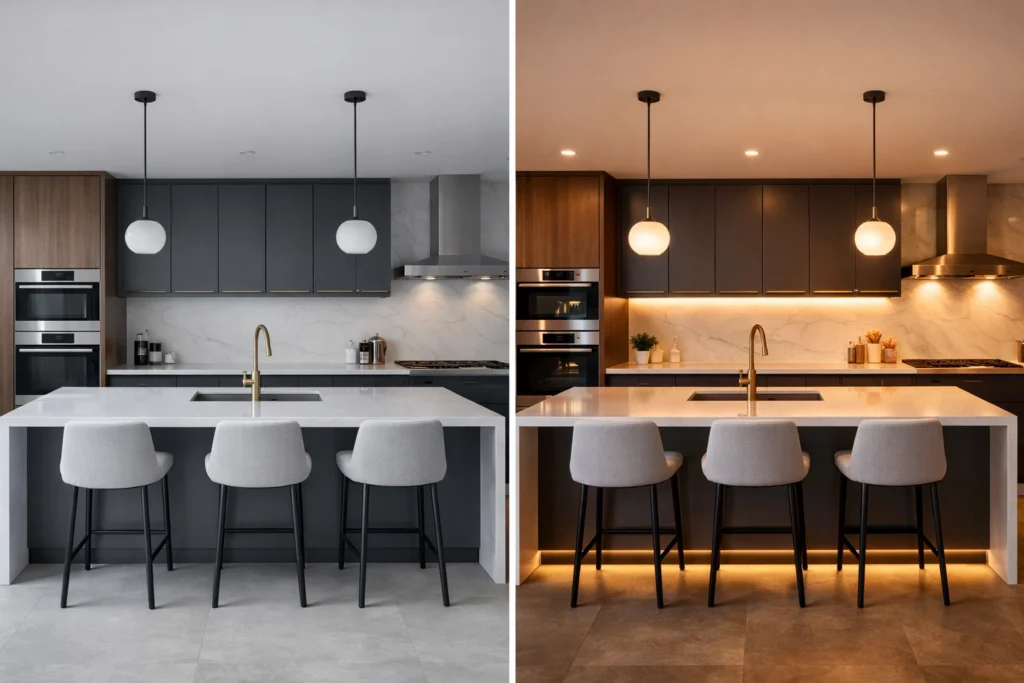
Have you ever finished a stunning kitchen design, only to realize that in the final render, the space feels "flat" or clinical?
Is lighting the most overlooked element in modern interior design?
It absolutely is. Lighting is no longer just about visibility; it is about emotion, rhythm, and the transition from a functional workspace to a social sanctuary. The longer (and more useful) answer is that lighting defines the architecture of a room just as much as the cabinetry does.
Why is layered lighting the new standard?
For years, many designers relied on a grid of recessed "can" lights and called it a day. Today, that approach feels dated and one-dimensional. The most successful contemporary kitchens use a three-layer strategy to create depth.
- Ambient Lighting: This is your base layer. It provides the general illumination needed to move safely through the space.
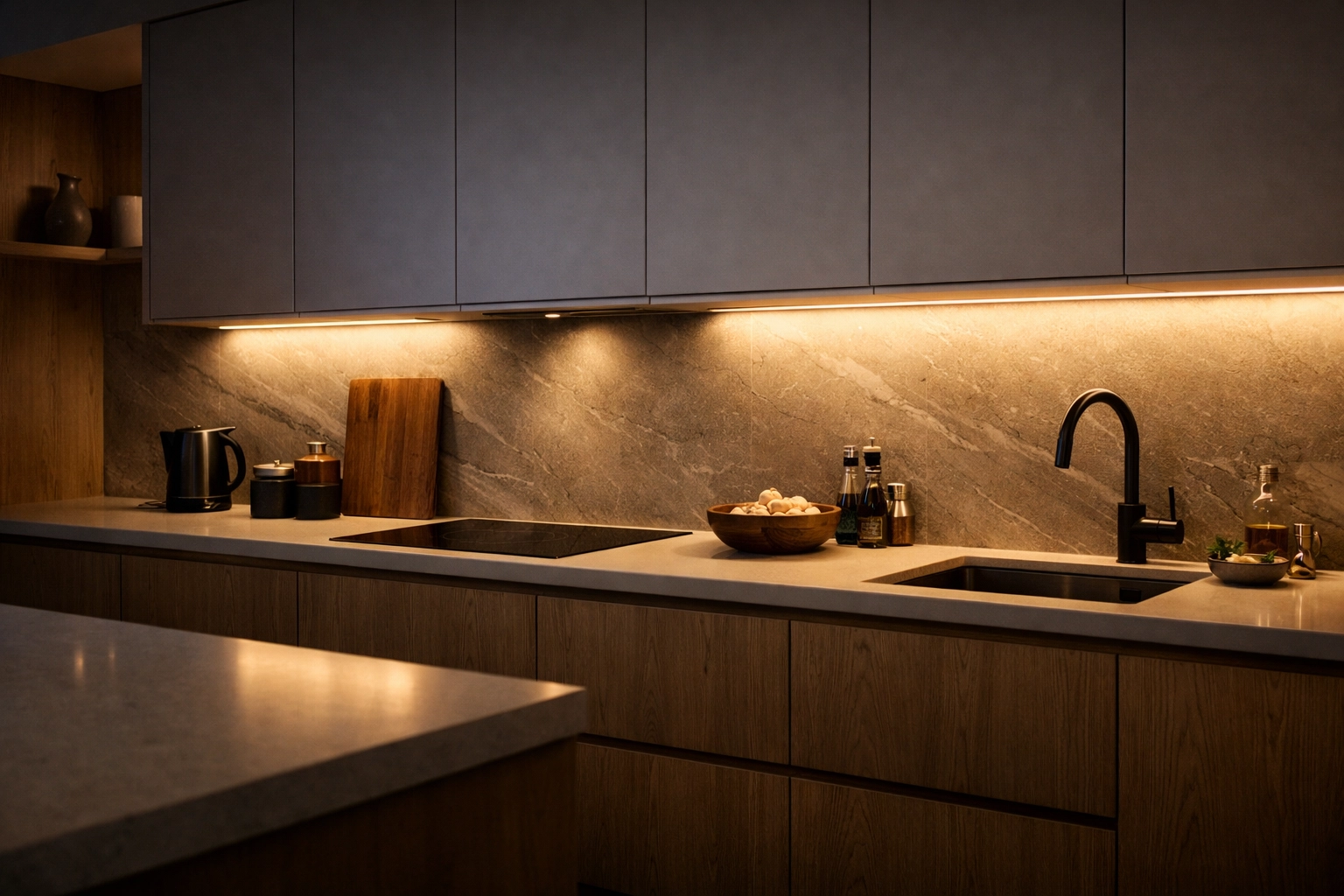
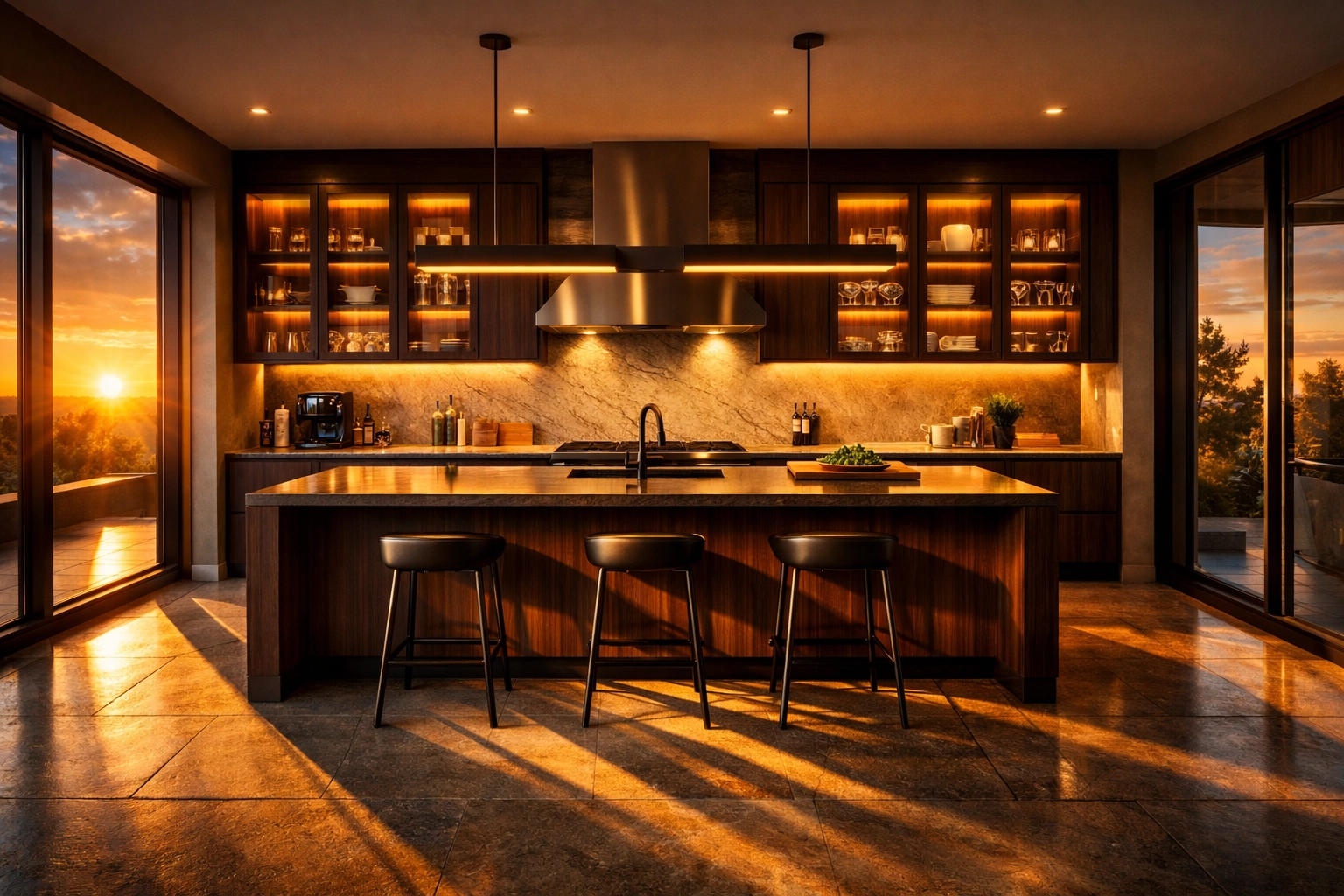
- Task Lighting: Critical for prep zones, hobs, and sinks. This is often achieved through high-output LED strips under wall units.
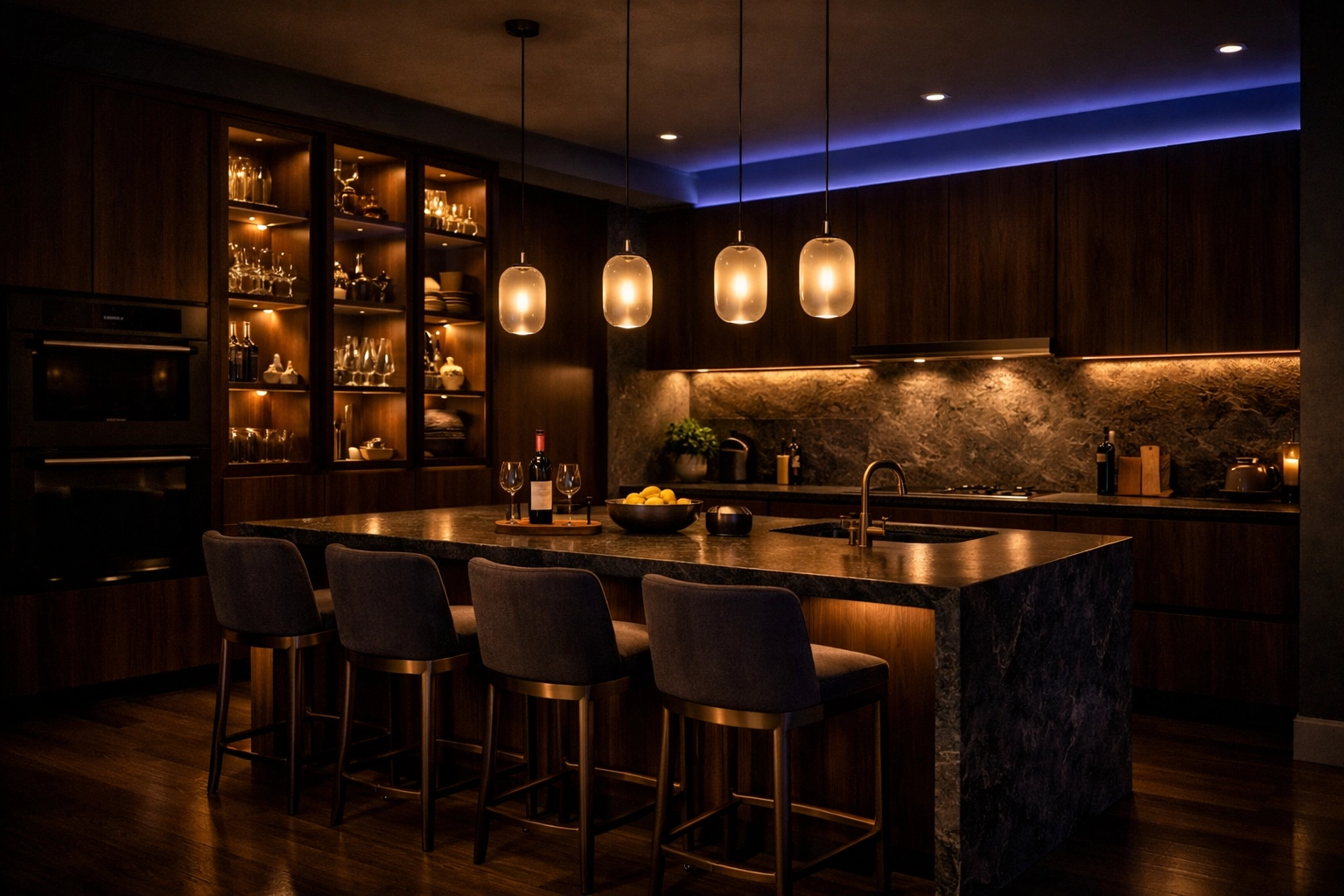
- Accent Lighting: The "jewelry" of the room. Think of these as the focal points: pendants over an island or lights inside glass-fronted cabinets.
Basically, if you only have one light source, you have a utility room, not a kitchen. By layering these sources, you eliminate harsh shadows and create a visual warmth that draws people in.
What materials are designers loving in 2026?
We are seeing a massive shift away from the "industrial warehouse" look. The cold, clear glass pendants and heavy black iron fixtures that dominated the last decade are being replaced by softer, more organic materials.
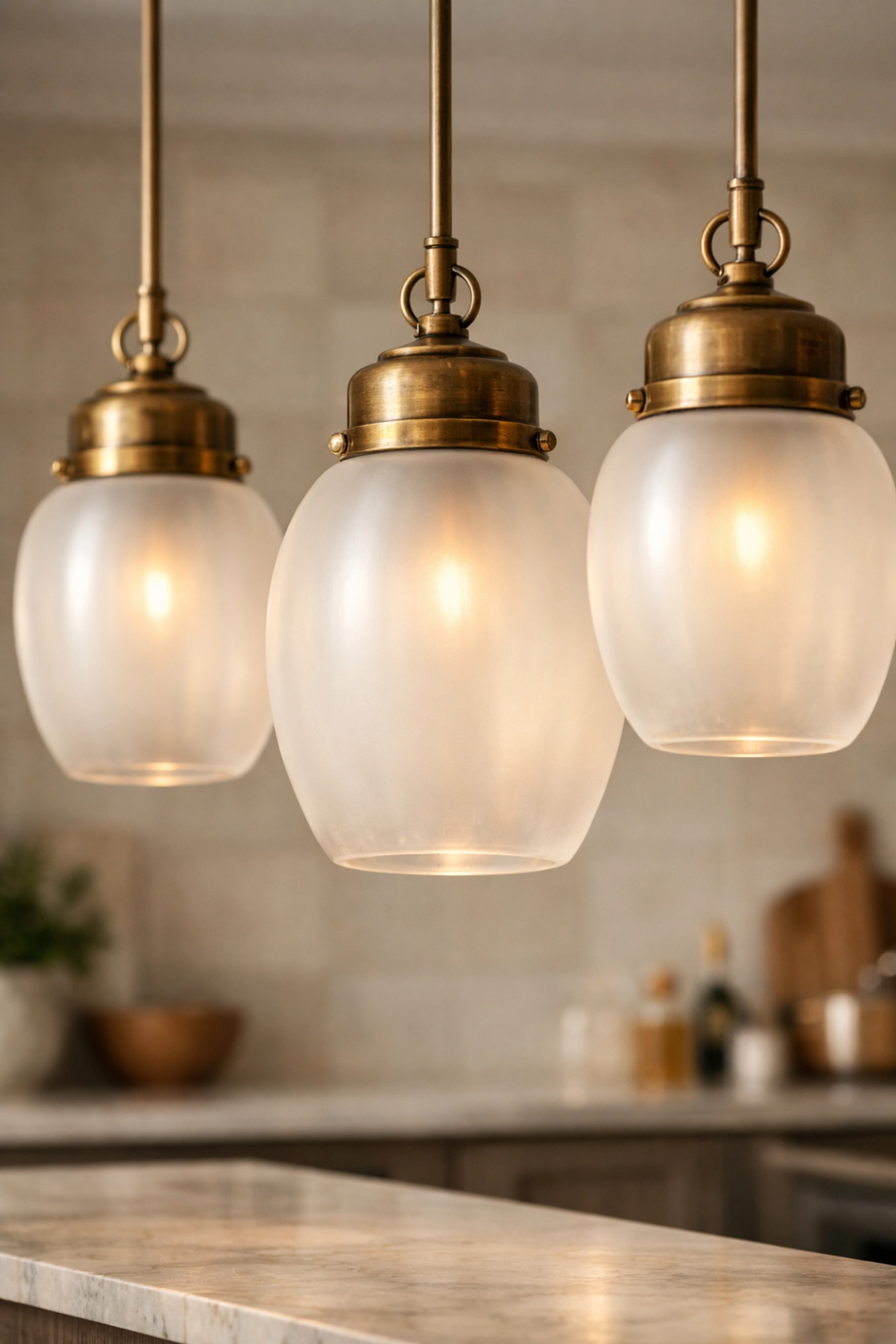
- Hand-Blown Glass: Specifically with subtle opacity or milky finishes. These diffuse light beautifully, preventing the "glare" that often ruins the atmosphere of a kitchen island.
- Aged Brass and Patina: Metals are becoming warmer. Brushing and hand-applied finishes help fixtures feel like heirloom pieces rather than mass-produced items.
- Textured Ceramics: Plaster and ceramic shades are trending for their ability to provide a tactile, architectural feel to the ceiling.
- Woven Textures: Natural fibers like rattan or raffia are moving from the living room into the kitchen to soften the hard surfaces of stone and laminate.
How does color temperature affect the mood?
Light isn't just "on" or "off." The temperature of that light: measured in Kelvins (K): can completely change how your materials look.
| Lighting Type | Temperature (K) | Best Use Case |
|---|---|---|
| Cool Daylight | 5000K – 6500K | High-precision prep work |
| Neutral White | 3500K – 4000K | General cleaning and day use |
| Warm Glow | 2700K – 3000K | Entertaining and evening dining |
This means: If you design a kitchen with beautiful marble veining and use light that is too "warm" (yellow), the marble will look muddy. Conversely, if you use light that is too "cool" (blue) in a room with warm wood tones, the space will feel uninviting.
Visualising lighting with AI: How KBB Render changes the game
One of the hardest things for a designer to communicate to a client is how a room will look at different times of the day. Traditional architectural visualization used to take days of manual light-mapping to get this right.
With KBB Render, you can experiment with these moods in seconds.
Experimenting with Lighting Modes
Our software allows you to toggle between specific lighting environments to see how your design reacts:
- Day Mode: High-contrast, natural sunlight flooding the space. Perfect for showing off textures and bright finishes.
- Night Mode: Focuses on internal fixtures, showing exactly how those pendants and LED strips interact with the room.
- Sunset Mode: Warm, long shadows that create a "Golden Hour" glow, helping clients fall in love with the emotional side of the design.
Using Batch Rendering for Lighting Comparisons
Why choose one when you can show them all? Using our Batch Rendering (6 variations) feature, you can generate six different lighting setups in one click. You can present your client with the 10 AM view, the 4 PM view, and the 9 PM dinner party view, all without any extra work on your part.
Mastering the "Inspiration Transfer"
Sometimes you see a photo of a high-end restaurant or a boutique hotel and think, "I want that light."
Our Inspiration Transfer tool allows you to take a reference style and apply it to your own geometry. If you have a specific lighting "vibe" in mind, you can upload the reference image, and KBB Render will apply that atmospheric quality to your kitchen design while keeping your layout and materials perfectly intact.
This is a massive leap forward for kitchen visualisation. You no longer have to be a "prompt engineer" to get the right light. You just need a vision.
Getting the technical details right
When you are ready to present to a client or print for a showroom display, the quality of the render matters. Low-resolution images can hide the subtle glow of a well-placed LED or make glass pendants look pixelated.
This is why we emphasize Native 8K Upscaling. By using high-end AI rendering software, you ensure that the delicate interplay between light and shadow is crisp, clear, and professional.
Stable Precision vs. Creative Realism
Depending on where you are in the design process, you might want different things from your render:
- Stable Precision: Best for when the lighting plan is finalized. It offers exact control, ensuring that every light fixture is placed exactly where you intended it in your CAD software.
- Creative Realism: Best for the "dreaming" phase. It gives the AI more freedom to add artistic flair, often suggesting atmospheric lighting effects you might not have thought of.
What’s coming next for interior lighting?
The technology is moving fast, and we are constantly updating the Knowledge Hub with new features.
Following the above, we have some exciting items on our roadmap:
- Still Render to Animation/Videos: Soon, you will be able to create cinematic fly-throughs where the light changes as you move through the room. Imagine showing a client a 10-second clip of the sun setting over their new kitchen island.
- Add/Remove Objects: This will allow for AI-powered scene cleanup. If a light fixture doesn't look quite right, or if you want to swap a pendant for a different model instantly, this feature will handle it without a full re-render.
Costs to consider in lighting design
When talking to clients about lighting, it’s important to be transparent about the investment. A high-end lighting plan usually accounts for 5-10% of the total kitchen budget.
Why the cost?
- Smart Systems: Integrated dimmers and voice-controlled zones add a layer of electrical complexity.
- Quality of LEDs: High CRI (Color Rendering Index) LEDs are more expensive but are essential for making food and materials look "true to life."
- Professional Visualization: Using tools like KBB Render helps avoid costly mistakes. It’s much cheaper to move a virtual light in a render than it is to move a physical one after the drywall is up.
Check our pricing page to see how you can start integrating these professional visuals into your workflow today.
Summarising Lighting Trends for 2026
So, is your lighting plan doing its job?
The key takeaway for 2026 is flexibility. Contemporary spaces demand lighting that can adapt to different tasks and times of day. By moving away from "theme-driven" fixtures and focusing on layered, material-rich lighting, you create spaces that feel timeless.
Bear in mind that:
- Layering is non-negotiable for a luxury feel.
- Organic materials like glass and brass are the new standard.
- AI tools like KBB Render make it possible to visualize these complex setups in seconds.
Ready to see your designs in a new light?
Explore our AI interior rendering tools or book a demo to see how we can help you create breathtaking, photorealistic presentations in 8K.
https://shorturl.fm/Avi7P
https://shorturl.fm/oqMKv